

In This Blog
- Transit yard management is the “first mile” of service: Where buses are parked, serviced, and staged determines whether pullouts leave on time and whether delays ripple across the line.
- Replace tribal knowledge with real-time visibility: With 43% of transit workers over 55, relying on a few experts to run the yard is risky. Yard management tools like Vontas OnSite give every team member a shared picture of bus readiness and location.
- Proven results at WeGo Public Transit: Nashville’s agency used Vontas OnSite to cut delays from misplaced vehicles, track vehicle status in real time, and improve on-time performance.
- Built for electric and mixed fleets: Smart charging strategies make charge status part of bus readiness, so agencies can position zero-emission and diesel buses without guesswork.
- Part of a connected, modular platform: Yard management works alongside enterprise asset management, intelligent transportation systems, and workforce management in Vontas OnTransit, so agencies can start small and scale.
Most transit agencies invest heavily in what happens out on the route. It’s second nature for teams to focus on refining schedules, ensuring real-time information reaches riders, and measuring on-time performance at every stop. This strategy, however, leaves one important area far less attended to, and it’s where every route starts and ends every day: the yard.
The yard is where much of the service day is decided, before a single bus reaches the street. A variety of factors in the yard determine whether the morning starts on schedule or lags behind: how it’s organized overnight, which vehicles are ready, where they are positioned, and how smoothly they can pull out, to name a few. If your operation depends on predictability, the yard is one of the easiest places to lose it.
Effective Transit Yard Management Sets the Tone
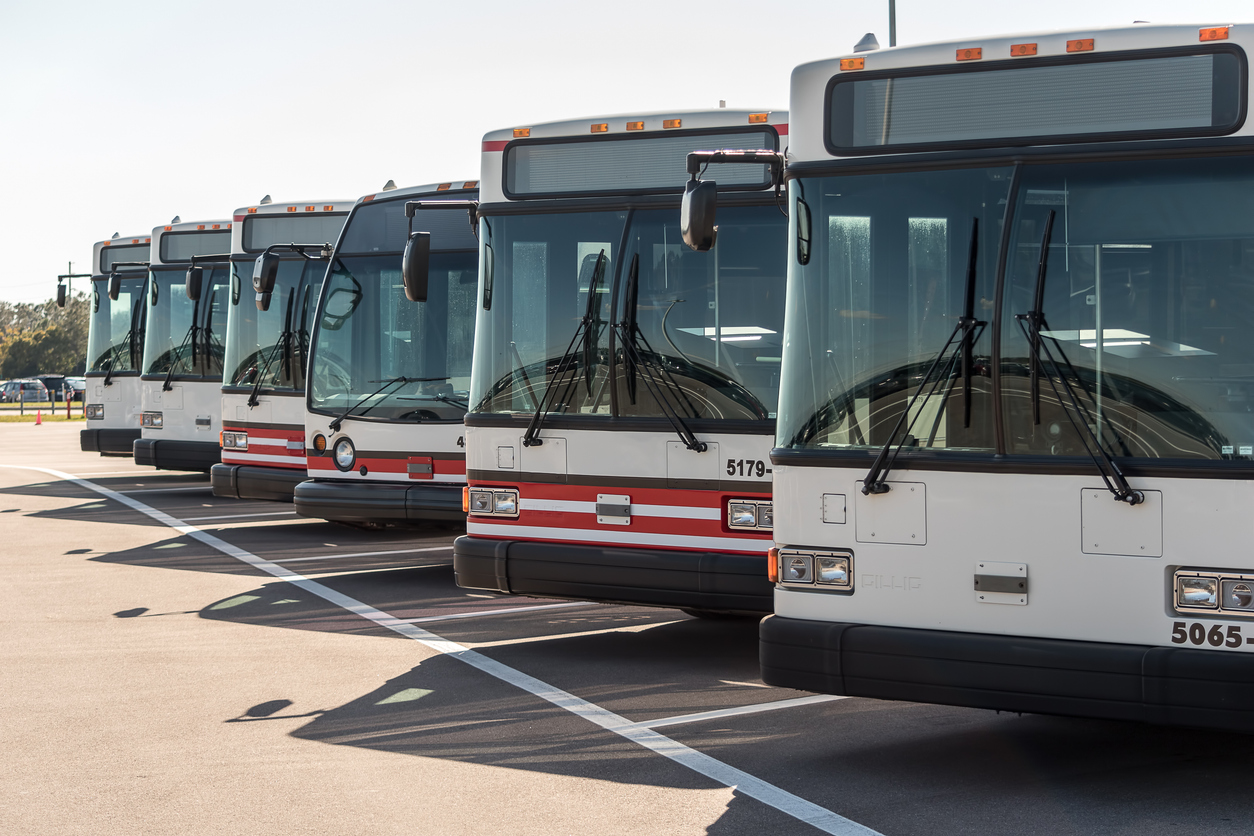
Before a transit fleet begins service, an agency will track, position, and ready its vehicles at the depot so each one can pull out on time. This practice, transit yard management, covers where a bus is parked, whether it has been serviced, and whether it is staged for its assignment. When teams do this correctly, the yard runs well and operators can leave on schedule. When it doesn’t, riders are left waiting and delays ripple across the line for hours.
The yard has long been considered back-of-house overhead. However, while it is physically considered to be “behind the curtain,” agencies should actually think of the yard as being the first mile of service.
Most Yards Still Run on Tribal Knowledge
In many instances, there are a few experienced transit workers who know their city’s transit yard like the back of their hand. Without hesitation, they can tell you which buses came in needing attention, where the spare is parked, and how to sequence the morning so nothing blocks anything else. That knowledge is real, and valuable, but this “tribal knowledge” is unfortunately not very scalable.
The transit industry is filled with lifers just like this, workers who’ve been with an agency or the sector for decades. In fact, according to data from the American Public Transportation Association (APTA), 43% of transit workers are over 55. That concentrates a wealth of knowledge in a small handful of minds, leaving little room for growth across the industry and within each agency. Not to mention that when the yard fills up, or a key person is out, the entire fleet suffers.
Positioning by memory and walking the lot to confirm status is also a painstakingly slow process. It makes team handoffs difficult and puts anyone not standing in the yard at that moment in the dark. Operations that run this way are carrying real complexity without the visibility to match it.
What Good Looks Like
Agencies can replace that guesswork with a clear, shared picture with transit yard management tools like Vontas OnSite. These solutions deliver a real-time view of the yard and show teams which buses are ready for service, where they are positioned, and whether they have been maintained. Optimized dispatching draws on real-time fleet tracking, turns assisted and automated parking positioning into a repeatable process that uses space more efficiently and reduces manual work, and enables yard monitoring from a mobile device, so a supervisor can manage it from anywhere.
Nashville’s WeGo Public Transit put this into practice. After upgrading its yard operations with Vontas OnSite, WeGo gained real-time visibility into bus movements and streamlined vehicle tracking, parking, and pre-service preparation. In the agency’s own account, the solution reduced delays caused by misplaced vehicles, gave the team full visibility into vehicle status and location, and improved yard efficiency for better on-time performance.
Electric Fleets Raise the Stakes
Sustainability is still at the forefront of many transit agencies’ minds. As they add zero-emission buses, the yard gets harder to run on instinct alone. For instance, a diesel bus is ready when it is fueled and positioned, but an electric bus is ready only when it is charged and positioned. Charge status also changes overnight, vehicle by vehicle, so a bus that looks available may not hold enough range for its block.
This is where transit yard management and fleet electrification combine. OnSite is designed to keep charge as part of readiness rather than a separate spreadsheet, using smart charging strategies for zero-emission buses that help agencies prepare and position a mixed fleet without guesswork.
Enabling a Fully-Connected Operation
Transit yard management delivers the most value when it’s not sitting in a silo. In Vontas OnTransit, transit yard management is one module in an interoperable platform that also spans enterprise asset management, intelligent transportation systems, and workforce management. The platform is also modular, so agencies can start with the most pressing problem and add capability as needs and budgets evolve.
Every agency has a yard, and every agency depends on it. Far too often, however, that dependence is quietly resting on a few people’s memories. Consider your agency’s operation for a minute. If the person who knows your yard best were to take a week off tomorrow, would your pullouts still go out on time? If you’re not sure, it might be worth taking a closer look. To see how Vontas OnSite can bring your yard into one real-time view and keep pullouts predictable as your fleet evolves.